Dec 10, 2025|Jully
Chatfuel AI Review: The Best AI Chatbot Platform for Ecommerce

Automating customer service and sales is no longer a luxury for online stores; it is a necessity. While directories like Peraiz are fantastic for discovering and comparing different automation tools, you might be wondering which specific solution fits your storefront. If you are looking for an in-depth breakdown, this chatfuel ai review: the best ai chatbot platform for ecommerce explores its features, pricing, pros, cons, and how it stacks up against top competitors. Chatfuel AI is a powerful platform offering no-code development specifically tailored for streamlining customer interactions, sales funnels, and product recommendations.
1. Overview of Chatfuel AI

2. Target Audience
3. Key Features
- No-code Interface With a drag-and-drop interface, Chatfuel allows users to create sophisticated chatbot workflows without any coding knowledge. This makes it accessible for non-tech-savvy users while still being powerful enough for developers.
- AI-powered Conversations Chatfuel uses AI and Natural Language Processing (NLP) to enable chatbots to understand and respond in a conversational manner, making interactions feel more natural.
- Integration with Major Platforms Chatfuel integrates seamlessly with platforms like Facebook Messenger, Instagram, WhatsApp, and websites, allowing businesses to interact with customers across various touchpoints.
- Ecommerce Integration Specifically designed for ecommerce chatbot platforms, Chatfuel helps businesses automate sales, recommend products, handle inquiries, and track customer orders on their website.
- Analytics and Reporting Chatfuel provides detailed analytics to monitor bot performance, track interactions, and optimize chatbot workflows for better engagement and conversion rates.
4. Competitors
ManyChat: A popular competitor offering a similar conversational AI chatbot platform for websites with a focus on Facebook Messenger and Instagram automation.
Tars: Known for its best chatbot development platform focused on lead generation and customer support for businesses.
MobileMonkey: Specializes in customer service chatbot platforms and multi-channel automation for businesses seeking to streamline communication across channels.

5. How to Use Chatfuel AI
Step 1: Sign Up and Create an Account
Step 2: Customize Your Chatbot Flow
Step 3: Integrate with Social Media and Ecommerce Platforms
Step 4: Test and Launch Your Chatbot
6. Pricing
-
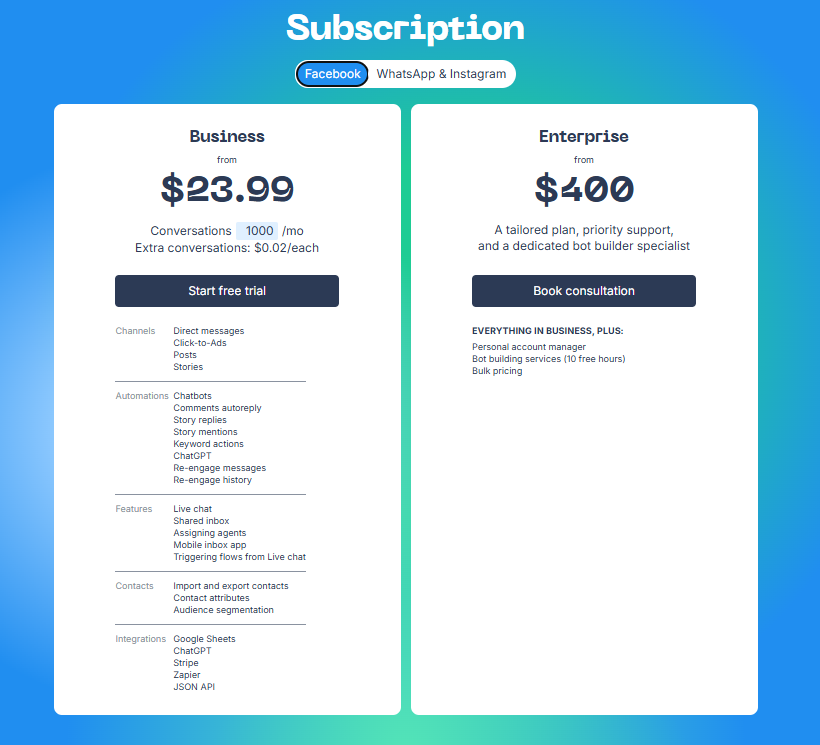
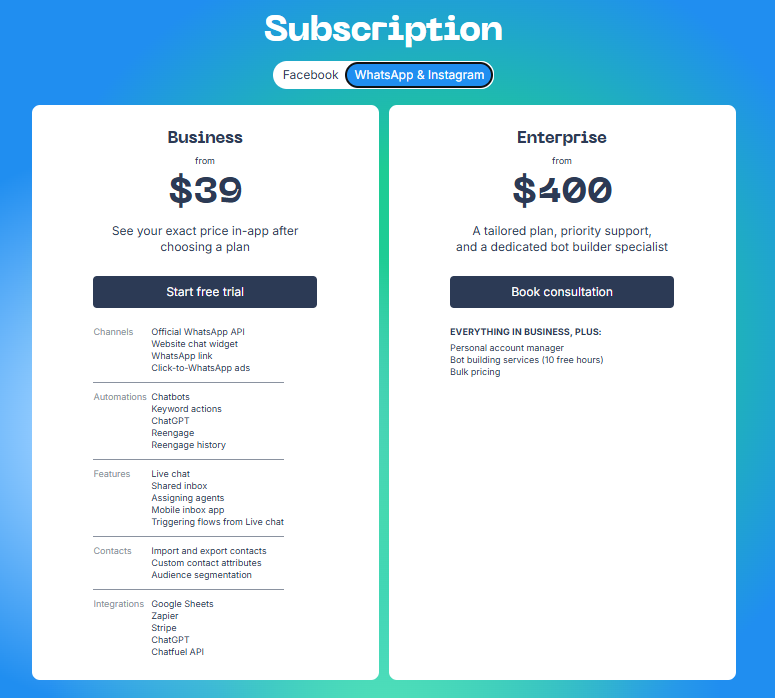
Business Plan: Starting at $23.99/month, offering up to 1000 conversations per month and additional features like direct messaging, automations, and integrations with major platforms like Facebook Messenger, WhatsApp, and more.
-
Enterprise Plan: Starting at $400/month, this plan includes tailored support, dedicated bot specialists, and other premium services to help large businesses scale.
7. Pros and Cons
Pros
-
Ease of Use: The no-code platform makes it easy for anyone to create and manage chatbots.
-
AI Integration: Provides conversational AI chatbot features that enable natural conversations with users.
-
Ecommerce Focus: Ideal for ecommerce chatbot platforms, automating product recommendations, order tracking, and customer support.
-
Affordable Plans: Chatfuel offers a free chatbot development platform with basic features, which is a great option for small businesses.
Cons
- Limited Advanced AI: While Chatfuel provides AI-driven conversations, the platform may struggle with more complex, multi-layered conversations.
- Free Plan Limitations: The free version has limitations on features such as integrations and advanced analytics, which may not be sufficient for larger businesses.
- Support for Non-English Languages: While Chatfuel supports multiple languages, its performance in some non-English languages like Vietnamese may not be as refined as other platforms.
8. Recommendation
For more expert reviews, tool comparisons, and actionable strategies to scale your ecommerce business using artificial intelligence, be sure to bookmark and explore the Peraiz Blog.